
Childhood Games and Real Police
The RoomThis thread follows childhood games of pursuit and make-believe into memories of genuine fear around police, showing how the boundary between play and actual authority becomes unstable.
increasing Bearing strength in each event
 decreasing
Bearing strength in each eventdecreasingNeighborhood Battles
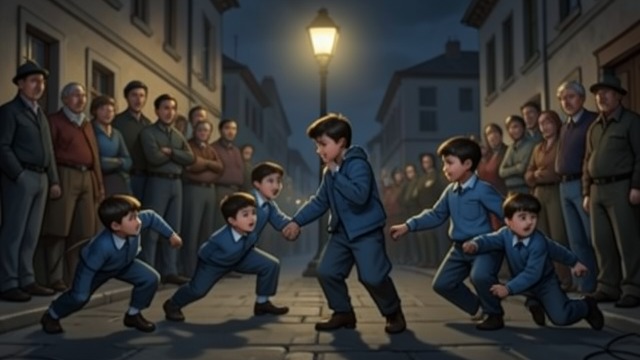
Battles in the Street
Play Made from Scraps
The prisoner remembers children filling a Brooklyn street with homemade guns, cardboard ammunition, scooters, and improvised sides. They ran, shouted, and staged battles until the pavement became part of the game.
An adult neighbor mistakes the commotion for something real and calls the police. The arrival of officers sends the children scattering, briefly turning their invented danger into a real encounter with authority.
The Game Persists
The memory is lively and comic, built from collective excitement and neighborhood detail. Yet the interruption hints at a recurring pattern: play depends on rules the children control, while adult authority can abruptly redefine what is happening.
The Rainy Gunfight
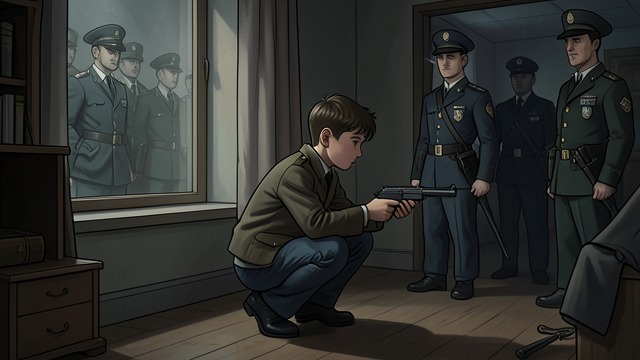
Playing Dillinger
A Bedroom Becomes a Hideout
On a rainy day, the boy turns a room into the setting for a gunfight with police. From beside the window, he imagines officers surrounding him and answers their calls to surrender with more make-believe shots.
The fantasy gives him a part to play: he is cornered, defiant, and prepared to fight rather than submit. Its vivid action makes an enclosed room feel like a stage on which he can control the danger.
A Mother Interrupts the Scene
His mother’s sudden arrival breaks the performance. He has to explain that nothing is wrong and that he was only playing, then lets the imagined gunfight fall away.
The episode links childhood make-believe to the novel’s later pattern of constructing violent scenes in confinement. In both, the imagined confrontation offers movement and power that ordinary circumstances do not provide.
The Dog-Bite Visit
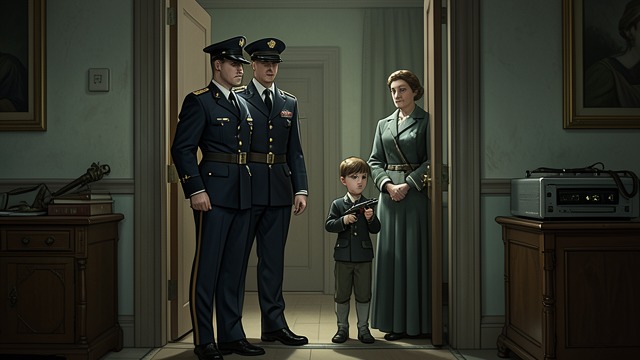
The Police at the Door
Fear Before the Explanation
When two police officers come to the family home, the boy assumes they have arrived because he has hurt another child. His mother introduces them, and their size and uniforms make the doorway seem threatening before he understands why they are there.
They have come to ask about a dog that bit him. The explanation gradually replaces his imagined arrest with the practical reason for the visit: the dog may need to be checked for rabies.
A Performance of Importance
The officers take him in their car to identify the dog’s home. With friends watching, he tries to look serious and enjoys the attention, even as an object in his pocket makes him fear that he might be searched.
The ride mixes real vulnerability with the appeal of being seen as important. Police presence is no longer only frightening or playful; it also gives the boy a brief chance to perform a role before his neighborhood.
The Hidden Slingshot
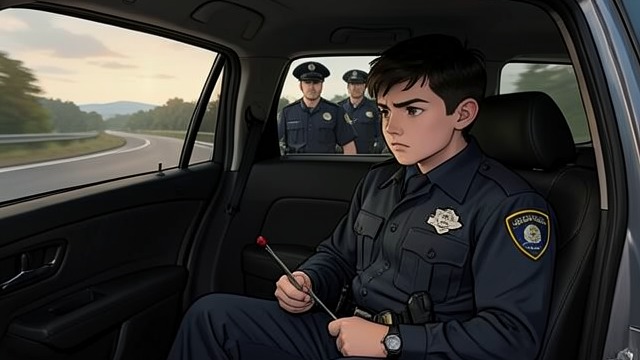
A Secret Kept
Suspicion in the Back Seat
As the officers drive him to the dog’s house, the boy becomes preoccupied with the slingshot in his pocket. He worries that they may find it and tell his mother, though their questions concern the dog and its owner.
His fear does not match the officers’ stated purpose, but it governs his attention. He watches the trip as if a search might occur at any moment and silently hopes to avoid being discovered.
A Story for His Friends
After the officers return him home, his friends rush over with questions. He tells them the story and emphasizes that he had kept the slingshot hidden the whole time.
The ending turns anxiety into a tale of escape and cleverness. The boy’s account preserves the excitement of having been near danger while shielding him from the shame or consequences he feared at home.
The Cell’s New Game
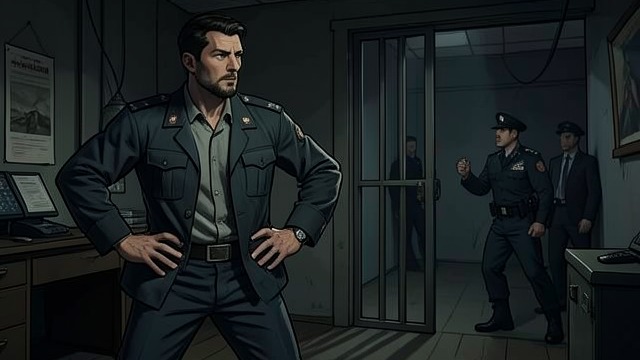
Hunting a Cop
Make-Believe Turns Hostile
Back in the cell, childhood games of cops and robbers slide into a darker imagined scene. The prisoner pictures himself overpowering officers and escaping the powerless position he occupies in reality.
Unlike the neighborhood battles, this fantasy carries no shared rules or playful aftermath. It becomes a private attempt to reverse the terms of an arrest and make the people who once seemed untouchable bear the consequences.
The Old Boundary Disappears
The shift from children’s games to violent revenge shows how the memories have changed under confinement. Experiences that once belonged to play now supply images for a grievance that the prisoner cannot resolve through real action.
The sequence does not establish that the imagined assault occurs. Instead, it shows how remembered childhood performance and present resentment combine inside his isolated, repetitive world.
during the protagonist’s Brooklyn childhood, recalled early in the cell narrative
during a childhood rainy day, recalled after the street-battle memory
at about age eight, in a childhood memory recalled after the cell’s imagined police encounters
during the return from the dog’s home, in the same childhood episode
later in the novel, after the childhood police memories and amid renewed cell pacing
